Most houses in North El Monte went up within the same stretch of years. Their roofs share framing and pitch, so the same details usually wear out first. We repair, relay, and replace those roofs.
Tell us the address, what covers the roof, and what it is doing now. We scope the job and document the plan before you spend anything.
On this page
How we re-roof a house here
We strip the old covering to bare sheathing, then evaluate the deck before anything new goes down. We replace the boards that have gone soft, roll out new underlayment, and rebuild the flashing. The covering goes on last, in the sequence its own material needs.
We can only examine the deck once the old covering comes off. Soft wood at valleys, eaves, and old vent openings is what usually moves an estimate.
When a board is soft, we cut it out and install new wood in its place. We show you the location, and the replacement appears on your invoice.
Flashing seals the joints at walls, chimneys, and valleys, and those joints leak first. We rebuild them while the deck is open rather than sealing over them later.
On a bigger roof we open one section at a time. Underlayment covers the deck while the new material follows behind.
Older houses in North El Monte
Most North El Monte houses went up before 1980, and the 1950s account for the largest share. That decade tells us where to look, and then we examine the roof itself. Nearly all of these roofs cover one home, and we price each one individually.
Reading your own roof from the ground
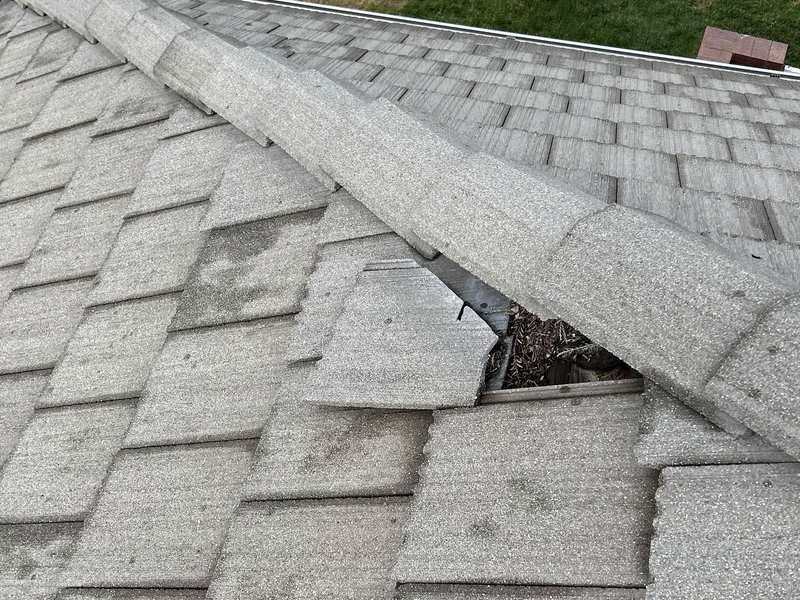
You can identify a lot from the yard and from inside the attic. On a shingle roof, look for granules accumulating at the bottom of the downspout. On a tile roof, look for slipped, cracked, or lifted pieces along the courses.
Inside, watch whether a ceiling stain grows after rain or stays the same size. A growing stain indicates water is still moving, and a stable one often marks an old patched leak.
Tell us what you find, and we will use it when we scope the roof.
Repair, relay, or replace
Those three options require very different amounts of labor, so we decide after we inspect the roof. Repair suits one isolated failure, like a cracked boot, a lifted shingle course, or a bad flashing joint. Relay suits a tile roof where the tile is still sound but the underlayment has worn out.
Our roof repair page covers individual leaks and patch work in more detail. On a relay we lift your original tile, replace the underlayment beneath it, and set the tile back.
Replacement suits a roof with too much rotten decking or too many layers already on it. Our roof replacement page explains that option.
Roof systems we install here
We fit the system to the house and to what the code allows at that address. Asphalt shingle is the usual answer on the detached houses of this era. Tile, standing seam metal, and torch-down low-slope systems cover the rest of the work here.
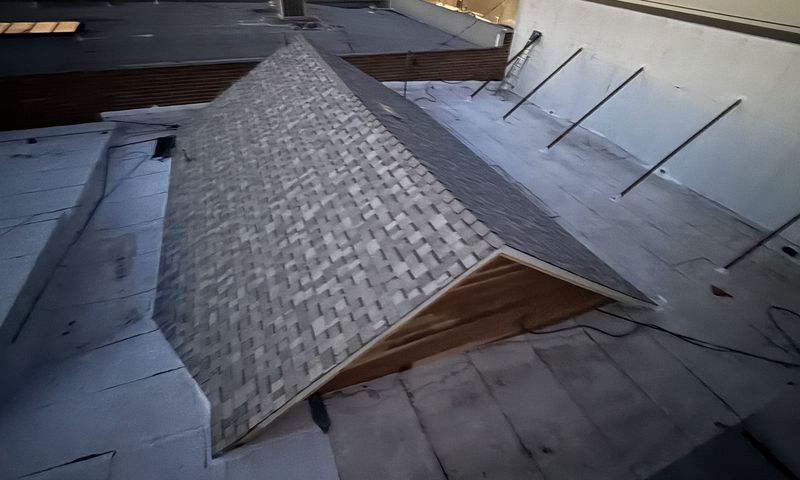
Asphalt shingle covers most houses on these blocks, and our asphalt shingle roofing page has the detail.
Clay, concrete, and slate tile roofing, including lift and relay.
Standing seam metal roofing, with concealed fasteners.
Low-slope flat roofing over porches, additions, and garages.
Metal panels differ by gauge, coating, and finish from one product line to the next. Your written scope identifies the exact panel and finish we plan to install. Ask us about it, and request the published warranty terms from the supplier.
Permits and the code that applies
When a roofing permit applies, we help you obtain it and prepare our side of the filing. The permit office reviews the application and establishes its own fees and schedule. North El Monte is unincorporated, so county Building and Safety handles that review.
We quote and re-roof houses in Census ZIP Code Tabulation Areas 91006 and 91780.
The Wildland Urban Interface Code carries California's wildfire roofing rules, and it took effect at the start of 2026. Those rules apply where the state maps a High or Very High fire hazard severity zone. Outside those mapped zones, the state minimum is a Class C assembly, the lowest of the three fire ratings.
Rain and drainage here
Rain comes in one short winter stretch, so a roof here handles months of runoff in a few weeks. Gutters, valleys, and low-slope tie ins carry that water off the roof. We examine each of them when we scope a job here.
Start with a free quote
Tell us what the roof needs, and the quote for that work costs nothing. The written report that escrow or an insurer wants is a paid service. Send us the address, what covers the roof, and roughly how old it is.
Your estimate starts from roof area, measured in squares of a hundred square feet each. Stories, pitch, and the number of existing layers adjust it from there.
Call (626) 323-8814 or use our contact form, and we will explain those numbers for your roof. The written scope you keep records every one of those numbers.
Most roofs here sit on houses built in the same decade. On roofs that old we look at the decking first, then at the flashing and the underlayment. Call (626) 323-8814 and tell us what the roof is doing now.
What is the 25% rule for roofing?
Nothing in California code turns on 25 percent of a roof. Inside mapped High and Very High fire hazard severity zones, half the covering is the threshold. Replace that much within twelve months and the new construction requirements apply to your roof.
What is the average cost of replacing a roof in California?
A statewide average cannot see your decking, your layers, or your pitch. Most houses here date to the same decade, and their roofs still differ under the covering. The quote is free, and the written scope of work comes with every number.
How to tell if a roofer is lying?
Ask what the roofer found on the deck and where the soft wood sits. Ask for the underlayment and flashing details in writing, not only the covering. A roofer who shows you the boards before replacing them gives you something to check.