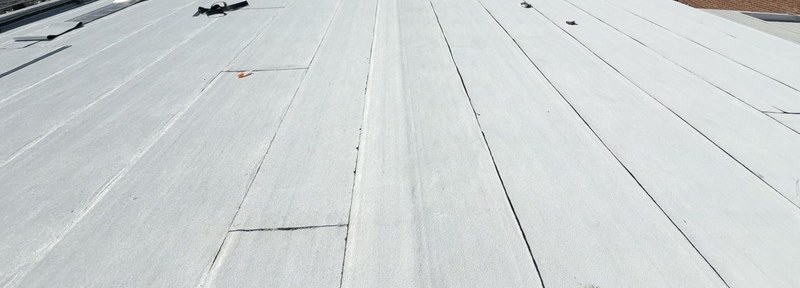
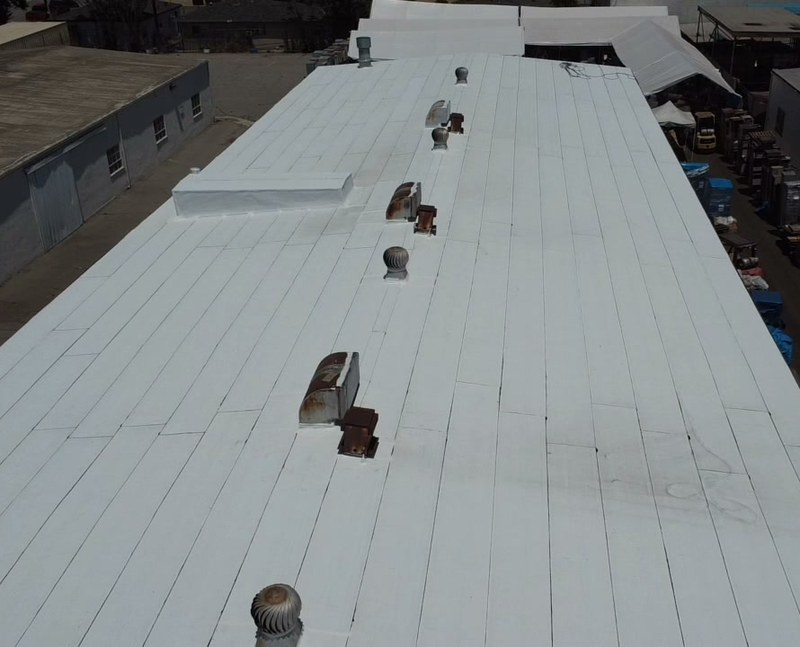
Torch-down roofing is a modified bitumen system we build up in layers on a low-slope deck. We heat the underside of each sheet and roll it into position, bonding it to the layer beneath.
It is our default flat roof system on houses and on commercial buildings. Call us and we will price it from the deck we measure.
On this page
How we build a torch-down roof
We build a torch-down roof in stages, and each stage depends on the one underneath it. We prepare the deck first and remove any deteriorated wood that appears. Then a base sheet goes down across the entire prepared deck surface.
Ply sheets follow, and the number depends on what the roof has to carry. We torch every lap so the sheets fuse instead of overlapping.
A granulated cap sheet finishes the assembly. That cap sheet takes the sun and the foot traffic once the roof is in service.
The cap sheet we install
We install Polyglass Polyfresko G as our preferred cap sheet on low-slope work. It is an APP granulated cap sheet, heat welded, with a reflective white surface. Polyglass rates it at a Solar Reflectance Index of 96 when new and 82 after weathering.
The granules shield the bitumen underneath from direct sun and give the roof a walkable texture. Polyglass publishes the system detail in its 2026 Kool Roof Solutions brochure.
Drainage decides how long a flat roof lasts
A low-slope roof still has a little pitch to it. Water has to reach a drain or a scupper and then leave the building. We examine the slope, the drains, and the edge metal before we quote any new system.
New membrane over a drainage problem fails early, because standing water sits on the seams and laps. Tell us where water stands after rain and we will start there.
Seams, laps, and terminations
Torch-down roofs fail where the sheets meet and where the roof surface stops. Laps, drain flanges, curbs, and parapet walls carry almost all of that risk. We weld those details by hand and check each one when the field work is done.
Wind gets under a lifted edge, so we set the edge metal and parapet caps carefully. Roofs carrying air conditioning units also get walk pads along the traffic lanes.
Every service visit puts weight and abrasion on the roof surface. Tell us how often people go up there, because that changes the cap sheet we specify.
Fire safety during torch work
Torch work puts an open flame on the roof deck, so we plan the flame details before work starts. Some transitions take a self-adhered or cold applied treatment instead of direct flame. We use that method at combustible edges and against adjoining walls.
We tell you which of those details need another method instead of the torch.
Where flat roofs sit on El Monte buildings
Many El Monte houses include a flat section over a porch, an addition, or a garage. Those sections leak first, because tile and shingle planes drain onto that small area. Commercial buildings run the same assembly across a much larger deck.
Most of the flat roofs we work on sit in 91731 and 91732. The Census uses those areas to organize local data. We also work in El Monte's Downtown and River East areas.
A bigger deck means more drains and more curbs, but the assembly underneath does not change. Our flat roofing page covers low-slope work in general, and TPO roofing covers the single ply route. Larger properties usually start on commercial roofing.
Repair, recover, or tear off
Blisters, open laps, and cracked flashing are all repairable. We cut out the failed area, dry the layers underneath, and rebuild the assembly. A cap sheet that has lost its granules across the whole roof is closer to a replacement.
Sometimes a new system can go directly over the existing one. Sometimes the deck has taken on water and everything has to come off. We open the roof to find out which situation you are in.
A flat roof is easiest to work on while it is dry, so we schedule maintenance between rain seasons. Debris blocks drains, and blocked drains hold water where it does damage. Small failures are ordinary roof repair work, and we take them.
What changes the price of a flat roof
Area, access, the number of penetrations, and the existing layer count all move the price. Rot beneath the covering moves it more than most of what we find up there. So we start with the deck and the slope of the surface.
Then we count the penetrations, the curbs, and the drains. We also check the parapet caps and the edge metal around the perimeter.
California moved to the 2025 Title 24 code cycle on January 1, 2026. Cities may amend that edition, and the state records those 2025 ordinance filings. The state code page lists the editions now in force.
Ask us to price your flat roof
Give us the address, the approximate area, and what the roof has been doing. Then we price the work from the deck we measure, and that estimate costs nothing. A documented condition report for escrow or an insurer is separate paid work.
Torch-down modified bitumen remains our default system on low-slope buildings across El Monte, California. Drainage and detailing determine performance far more than the cap sheet product itself does. The answers below cover the common failures, the expected service life, and what the finished work costs.
What are common problems with torch down roofs?
Open laps, blisters, lifted edge metal, and blocked drains are the common problems on a torch-down roof. Trapped water can work at seams and edges before it appears inside the building. Those are ordinary repairs for us, and the quote is free.
How many years does a torch down roof last?
Drainage and detailing decide it more than the cap sheet does. Standing water sits on the laps and seams, and it works at them until they open. We check the slope, the drains, and the edge metal before we quote.
How much does it cost to torch down a roof?
Roof area, access, the penetration count, and the existing layers set most of it. Rot under the covering moves it further, so we start at the deck and the slope. We then count the curbs, the drains, the parapet caps, and the edge metal around the perimeter.