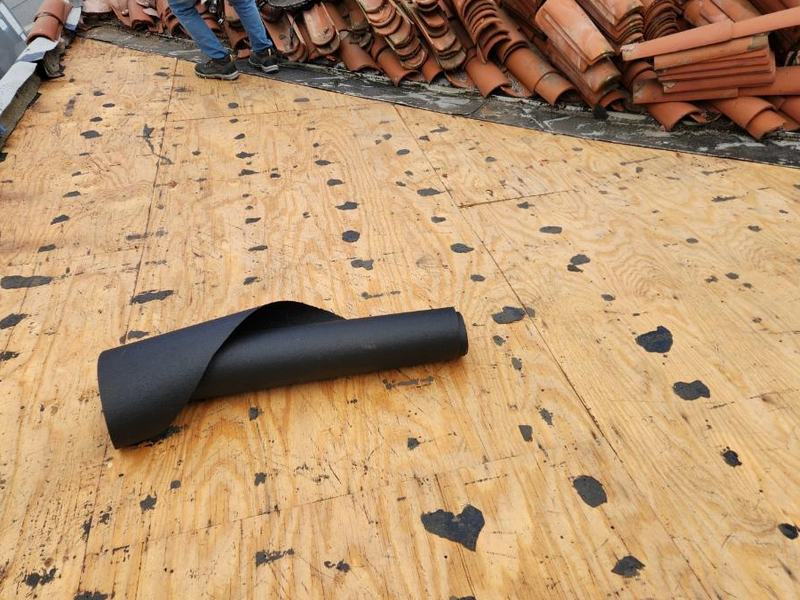
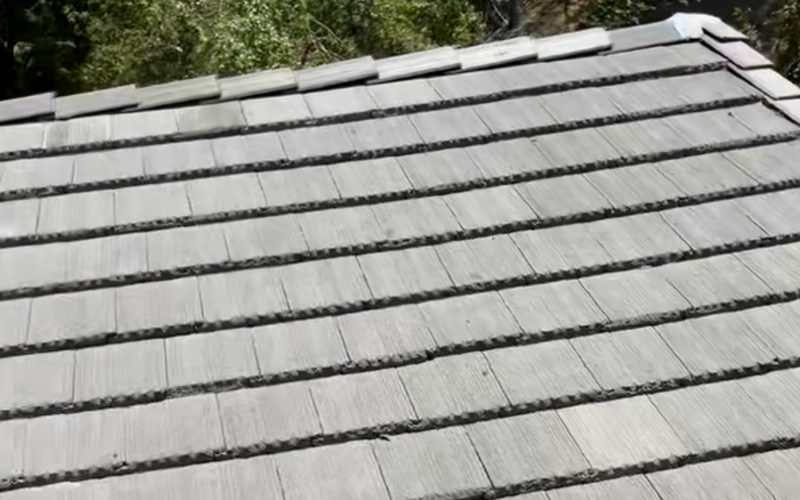
A lift and relay replaces the underlayment under your tile and puts the same tile back. We lift the tile in sections, repair the deck, and lay a new membrane. A leaking tile roof in El Monte may need that work rather than new tile.
A waterproof membrane sits between your tile and the wood deck. It sheds the water that gets past the tile. When that sheet fails, the tile above it can still be in good shape.
On this page
What a lift and relay replaces
A relay replaces the underlayment, the flashing, and any rotted decking beneath your existing tile. Your original tile returns to the roof on top of the new membrane. That separates a relay from a tile replacement, which also includes a complete set of new tile.
Stage one: lifting and stacking the tile
We lift the tile in sections rather than stripping the whole roof at once. We take each section off and stack it on the roof or on the ground. That keeps the open area small, and the tile stays in the order it came off.
Tile can break during a lift. We allow for that breakage in the estimate before the work starts.
Stage two: stripping the failed underlayment
With the tile off, we strip the old underlayment down to the bare deck. That sheet is what gave out and let water reach the wood. We clear the old fasteners and debris too, because new underlayment needs a clean surface.
The Tile Roofing Industry Alliance publishes installation guides for concrete and clay tile roofs. They cover underlayment along with the rest of the system.
Stage three: inspecting and repairing the deck
Decking, also called sheathing, is the wooden layer underneath the underlayment. We inspect every board once the membrane is off, and we replace the boards that have rotted. The rot hides under the tile, so nobody can count the damaged boards in advance.
We show you the damage before we replace anything.
Stage four: laying new underlayment and flashing
New underlayment goes down over the repaired deck, and that membrane carries the water from here on. We rebuild the flashing at the same time. Flashing is the metal that seals joints at walls, chimneys, and valleys, where many leaks begin.
Those joints matter more than the rest of the tile. We rebuild them while the roof is open.
Stage five: relaying your original tile
We put your tile back on the roof in the pattern it came off in. It now sits over a new sheet that sheds water the way it should. From the street the roof looks the same as it did before.
We reuse every tile that survives the lift. When pieces break, we look for replacements that match the profile already on your roof.
What decides whether a relay fits your roof
Tile condition and deck condition decide a relay more than any other factor. An older roof can still have excellent tile above an underlayment sheet that has deteriorated. We evaluate the tile and the decking separately before we recommend a relay.
Widespread cracking or heavy past patching pushes the job toward a rebuild.
For the pieces that break, we need replacement tile that matches your profile.
We replace rotted boards, and rot across most of the roof means a rebuild.
Valleys, dormers, and low slope tie ins add detail work that a simple hip roof does not.
The underlayment and flashing have to suit the tile above them and the slope of the roof.
When a relay is the wrong call
A relay assumes your tile is worth keeping and the decking underneath remains mostly solid. When too much of either material has deteriorated, we price a complete rebuild instead. Ask us to price a relay and a rebuild whenever your roof approaches that boundary.
How we price a relay
We price a relay from the roof itself, so we measure before we quote. Roof area comes first, and we count it in squares of one hundred square feet. Stories, pitch, deck condition, and tile handling move the number from there.
Call (626) 323-8814 and ask for a free estimate on your tile roof.
A written inspection report for escrow or an insurer is separate paid work. Ask us for the current fee when you call.
Permits and the code that applies
Your city or county decides whether a lift and relay needs a permit at all. When a permit applies, we help you get it before we lift the first section of tile. California now runs on the 2025 Title 24 edition of the building code.
Cities across Los Angeles County can amend that edition. The state records those filings in its 2025 ordinance register.
If the state maps your address in a High or Very High fire hazard severity zone, the covering rules tighten. Replacing half the covering or more within twelve months triggers the new construction requirement there. We check the address before we specify a relay.
Where to go next
Our tile roofing page covers the wider service, including new tile installations. If one slipped tile or a single leaking valley is the whole problem, roof repair is the better start. For everything else we do, see roofing in El Monte.
Call us to ask for a free estimate, or send the contact form with a short description.
Frequently Asked Questions
Tile roof lifespan comes down to the underlayment beneath the tile. The deck under that sheet and the flashing at the joints matter just as much. If your roof raises additional questions, call us and ask for a free estimate on your tile roof.
How many years should a tile roof last?
The tile usually outlasts the sheet underneath it, so the underlayment sets the timeline. Once that sheet gives out, the roof needs a relay even though the tile is fine. Ask for a free estimate before you plan a relay or a full replacement.